

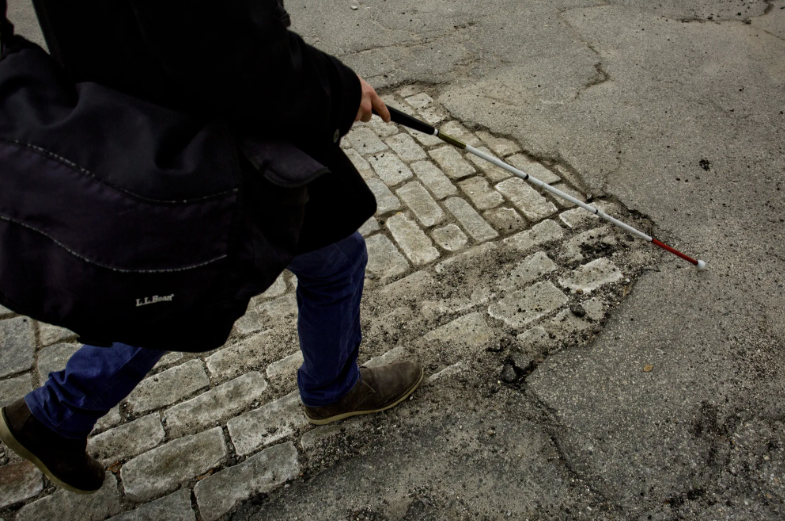
Getting around New York City is challenging for anyone, but for people who are blind or have low vision, it requires a constant stream of sensory awareness, memory, and adaptation.
A recent Bloomberg CityLab feature by John Surico follows visually impaired commuters as they navigate the city’s streets and subway system, revealing both the ingenuity of riders and the persistent gaps in urban accessibility.
Navigating by Touch, Sound, and Routine
Blind commuters rely heavily on tactile and auditory cues: feeling for platform edges with a cane, listening for crowd movement, and memorizing routes. Even small inconsistencies can have serious consequences. In one example, worn or improperly installed tactile strips on a subway platform caused a rider to fall onto the tracks.
Daily travel often becomes a mental checklist: identifying landmarks, counting steps, and interpreting subtle environmental signals that sighted riders may never notice.
A System Full of Gaps
Despite progress, major accessibility barriers remain. Much of the subway system is still not fully ADA-compliant, and critical features like audible signals at intersections are missing in most locations.
Technology solutions – such as QR-based navigation tools – exist, but they are not always usable for people who are fully blind. Real-time information in trains is also inconsistent or difficult to access, especially during emergencies.
Progress, But Not Yet Transformation
New York has taken steps forward, including installing more accessible infrastructure and expanding elevator access. However, many upgrades focus on retrofitting existing systems rather than rethinking accessibility from the ground up.
Advocates argue that true accessibility requires consistency, maintenance, and universal design, not piecemeal fixes.
Designing Cities for Everyone
The article highlights a broader lesson: cities designed to work for blind residents tend to work better for everyone. Features like clear wayfinding, safer crossings, and intuitive transit systems improve usability across all populations.
Examples from other places, like cities with audible traffic signals, tactile paving, and accessible building layouts, show what’s possible when accessibility is treated as a core design principle rather than an afterthought.
Bottom line
Blind New Yorkers have developed remarkable skills to navigate a complex system, but they shouldn’t have to rely on workarounds. With better design, consistent standards, and thoughtful investment, cities can make independence and mobility truly universal.
Read the full article by John Surico HERE