

A Guide for Older Adults and People with Disabilities
Winter weather can make traveling more challenging, especially for older adults and people with disabilities. Snow, ice, freezing rain, cold temperatures, and reduced daylight can affect sidewalks, bus stops, vehicles, and schedules. Still, with a little preparation and awareness, public transportation can remain a safe and reliable way to get where you need to go during the winter months.
This guide offers practical tips to help you plan ahead, stay comfortable, and reduce risks when using public transportation in inclement winter weather.
Plan Ahead Before You Travel
Check weather and service updates.
Before leaving home, look at the local weather forecast and check transit service alerts. Many transit agencies post delays, route changes, or cancellations on their websites, phone lines, or social media. Knowing what to expect can help you avoid long waits in cold or icy conditions.
Allow extra travel time.
Winter weather often slows everything down. Buses may run late, paratransit trips may take longer, and roads may be slick. Planning extra time reduces stress and lowers the risk of rushing, which can lead to slips or falls.
Have a backup plan.
If conditions become unsafe, consider alternatives such as paratransit, volunteer driver programs, community shuttles, or rescheduling your appointment if possible. It is okay to prioritize your safety.
Dress for Safety and Comfort
Wear warm, layered clothing.
Dress in layers so you can adjust your temperature easily. A warm coat, hat, gloves, and scarf help protect against cold winds and low temperatures, especially while waiting for a bus or ride.
Choose footwear carefully.
Wear shoes or boots with good traction and non-slip soles. Avoid smooth or worn-down shoes, which increase the risk of slipping on ice or snow.
Use visibility aids.
Winter days are shorter and darker. Bright clothing, reflective strips, or a small flashlight can help drivers and others see you more clearly, especially in early mornings or evenings.
Stay Safe at Bus Stops and Pickup Areas
Arrive early, but be cautious.
Getting to the stop early can help you avoid rushing, but stay aware of icy sidewalks, snowbanks, and uneven surfaces.
Wait in a safe location.
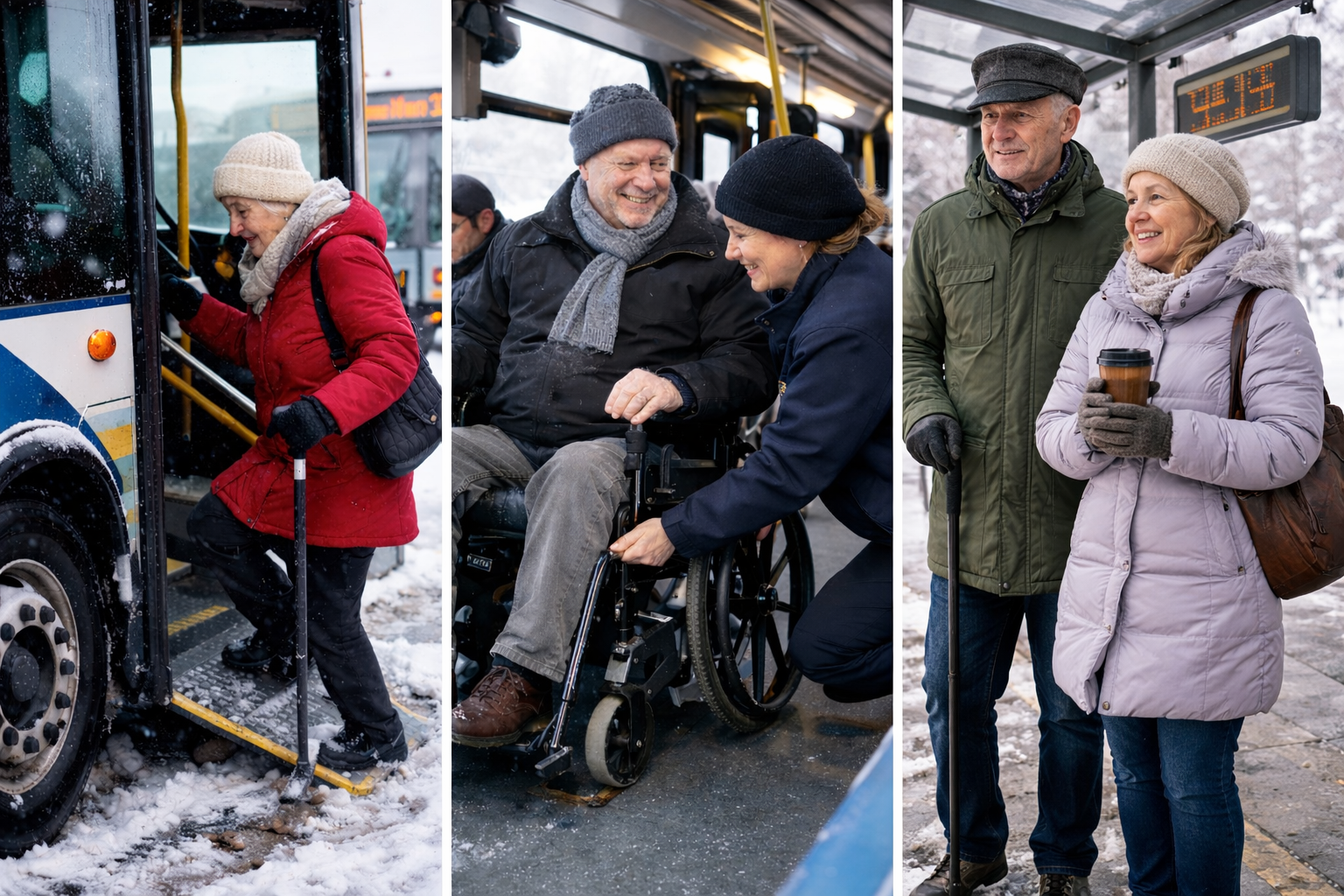
Stand away from the curb and road traffic while waiting. Avoid standing on icy patches or snow piles, and keep a safe distance from passing vehicles.
Use seating and shelters when available.
If a bench or shelter is available, use it to rest and stay protected from wind and precipitation. If standing is difficult, consider using a mobility aid or folding seat if appropriate.
Boarding and Riding Safely
Take your time when boarding.
Allow the driver to fully stop the vehicle before approaching. Use handrails and take one step at a time. Do not hesitate to ask the driver for a moment if you need extra time to board.
Ask for assistance when needed.
Transit operators are trained to assist passengers. If you need the ramp deployed, help with boarding, or priority seating, ask clearly and calmly.
Hold on during the ride.
Winter roads can be bumpy or slippery. Use handrails and remain seated whenever possible. If standing is unavoidable, hold on firmly.
Secure mobility devices properly.
If you use a wheelchair, walker, or scooter, ensure it is positioned and secured according to the vehicle’s safety guidelines.
Exiting the Vehicle Safely
Watch your step when exiting.
Snow and ice may have built up near curbs or drop-off areas. Pause, look down, and step carefully.
Ask the driver to stop at the safest location.
If possible, request a stop where sidewalks are clear and curb cuts are accessible.
Take a moment before moving on.
After exiting, give yourself time to steady your balance before walking away from the vehicle.
Protect Your Health and Well-Being
Carry essentials with you.
Bring necessary medications, emergency contact information, a charged phone, and any mobility aids you rely on.
Stay hydrated and nourished.
Cold weather can reduce thirst, but staying hydrated and eating regularly helps maintain energy and balance.
Know your limits.
If conditions feel unsafe or overwhelming, it is okay to delay travel or ask for help. Your safety is more important than keeping a schedule.
Stay Connected and Informed
Save important phone numbers.
Keep transit customer service numbers, paratransit providers, or local mobility assistance programs easily accessible.
Report unsafe conditions.
If you notice icy bus stops, blocked ramps, or other hazards, report them to your local transit agency or municipality when possible.
Final Thoughts
Winter weather brings added challenges, but it does not have to stop you from staying active and connected. With careful planning, appropriate clothing, and awareness of your surroundings, public transportation can remain a safe and supportive option throughout the winter season.
Remember: slow down, ask for help when needed, and put safety first. By taking these steps, you can travel with greater confidence, even when winter weather is at its worst.